Walk with me for a minute. Imagine you go door-to-door in your school building and ask twenty teachers a simple question: “What are the core components of quality, high level, daily Tier 1 learning?” Would you hear the same answer twenty times? Or would you collect twenty different versions of “it depends”? If you aren’t hearing the same thing from at least 80% of the staff, then we have the same thing happening when we have less than 80% of our learners meeting the learning goals: we have a Tier 1 problem.
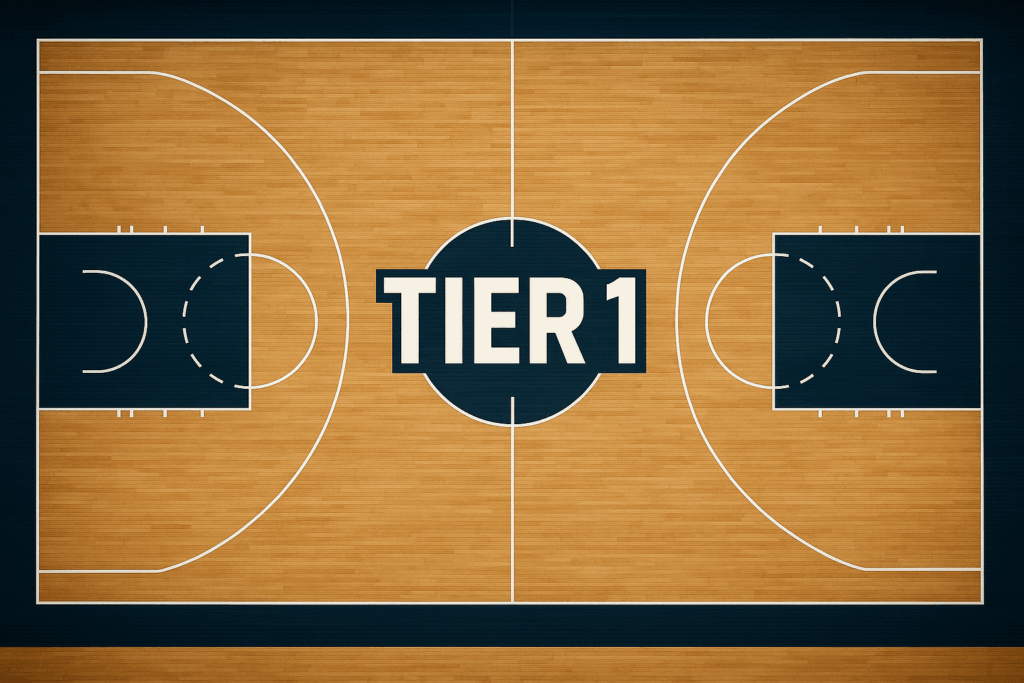
Here’s the rub: creativity doesn’t come from chaos; it flourishes inside clear lines. Professional basketball has a court, a shot clock, three seconds in the lane. Those are just boundaries. And yet inside what some would call “restrictions,” Jordan levitated and flew and LeBron orchestrates symphonies. The lines didn’t limit them. The lines made greatness visible to everyone on and off the court.
Tier 1 is our court. When we don’t agree on it (aligned, understood, and lived) kids get a different game every period. That’s not equity, that’s roulette. It’s time to draw the lines together, commit to them, and run the floor with consistency. Then, and only then, can we examine our impact and move the needle.
The Problem Isn’t Effort, It’s Clarity
We don’t have a willpower problem. We have a picture problem. Most educators are grinding: planning late, grading longer, caring deeply. But effort poured into a fuzzy frame still produces fuzzy results. When Tier 1 isn’t commonly defined, every classroom becomes its own planet with its own gravity. Different orbits. Different rules. Learners who switch periods or switch teachers experience a new universe every hour. Same school, different game.
Coverage masquerades as clarity. We map pacing guides, we post agendas, we march through content. But if we haven’t agreed on what a high-quality learning experience looks like in practice, in the room, then we’re managing motion more than we’re engineering learning. Don’t get me wrong, motion feels good. It looks busy. But that isn’t the same as growth and progress.
Here’s what the variability does:
- It inflates luck and deflates equity. A learner’s experience depends on the draw rather than the design. “Every student deserves a great teacher, not by chance, but by design.”
- It muddies our data. If we aren’t delivering the same core elements of Tier 1, we can’t tell whether outcomes are about the approach or the person implementing it.
- It blocks effective coaching. You can’t calibrate what you’ve never defined. Feedback gets vague like“try more engagement,” or “tighten the checks” because we don’t share a specific, observable picture of what those things are.
And here’s the hardest truth: without a shared picture, “freedom” turns into isolation. Autonomy becomes “figure it out alone.” That’s not professionalism; that’s just playing roulette. True professionalism is a craft practiced inside agreed-upon standards: clear intentions, visible success criteria, tasks that elicit thinking, feedback that changes what happens next. The lines don’t shackle us. The lines concentrate us. They bring the real work into focus. Once we’re concentrated, we can measure, adjust, and improve together. That’s when effort becomes impact.
Typical Tier 1 Non-Negotiables
Teacher clarity through learning intentions and success criteria
Every lesson answers three learner questions out loud and on purpose: What am I learning? Why? How will I know I learned it? Not a poster. A design move. Clarity turns invisible expectations into visible targets, and it travels with the learner from task to task, class to class.
Designed tasks resulting in products that show learning.
Tasks aren’t busywork; they’re evidence. Learners produce explanations, models, comparisons, arguments, solutions: all work that maps directly to the success criteria. When tasks demand reasoning and defense, we’re building thinking, not just finishing.
Feedback loops and formative checks during, not after.
Tier 1 breathes through quick, purposeful checks that alter next moves: reteach, extend, pivot. Think chef tasting the soup while cooking, not critics after service. Feedback isn’t a label; it’s information that changes the next attempt.
None of this dictates how a teacher brings their craft to life. It guarantees that, no matter which room a learner enters, the game is recognizable: targets are clear, tasks show learning, and feedback steers the next possession.
From “My Way” to “Our Way” by Building Collective Commitments
Here’s how we turn this from a pep talk into a playbook:
- Co-construct the look-fors. In a single working session, define 6–8 Tier 1 non-negotiables in learner-friendly language. Keep it tight. Name what an observer could see or hear that proves each one is happening (e.g., “Learners can state the learning intention in their own words and point to success criteria on today’s task”).
- Run learning walks for calibration. Small, non-evaluative teams visit for 5–7 minutes, collecting only evidence aligned to those look-fors. Debrief with “What evidence did we see? What didn’t we see yet?” No grades. No gotchas. Just clarity and growth.
- Use learner voice as the barometer. Ask the three magic questions. If most can’t answer them, the problem isn’t effort; it’s Tier 1 clarity. Fix the system, not just the symptoms.
- Examine impact, not intent. Anchor Collaborative Team time to the artifacts tasks produce. Who met the success criteria? Who almost did? What feedback or re-teaching moved the dial? Then adjust Tier 1 before we start chasing Tier 2/3 band-aids.
When we do this together, we build collective teacher efficacy: our shared belief that we can cause learning. That’s not feel-good fluff; it’s one of the strongest levers in the research base. When a staff commits to common work and measures its impact, learning accelerates.
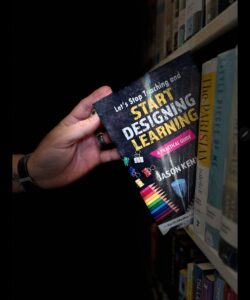
Tier 1 is the game. If Tier 1 is fuzzy, nothing else scales. So let’s draw the court together. Name the non-negotiables. Commit to them. Deliver them daily. Then study the film like pros: What worked? For whom? What’s our next adjustment? That’s how we move from delivering content to designing learning. That’s how we make our impact visible. And that’s how we become the team that doesn’t just show up to play. We show up to play to win the right way, every day.