Education has a habit of creating terms that sound important but mean different things depending on who you ask. One of the most common examples is Tier 1 instruction. Walk into ten schools and ask ten educators to define it and you will likely get ten different answers. Some will say it is the core curriculum. Others will say it is grade level instruction. Some will say it is whatever happens before intervention begins. And some will simply shrug because the phrase has become so broad that it no longer guides practice.
The problem with vague language is that it produces vague expectations. When expectations are vague, implementation becomes inconsistent. And when implementation becomes inconsistent, learning becomes uneven. What schools actually need is not another label. Schools need a shared promise.
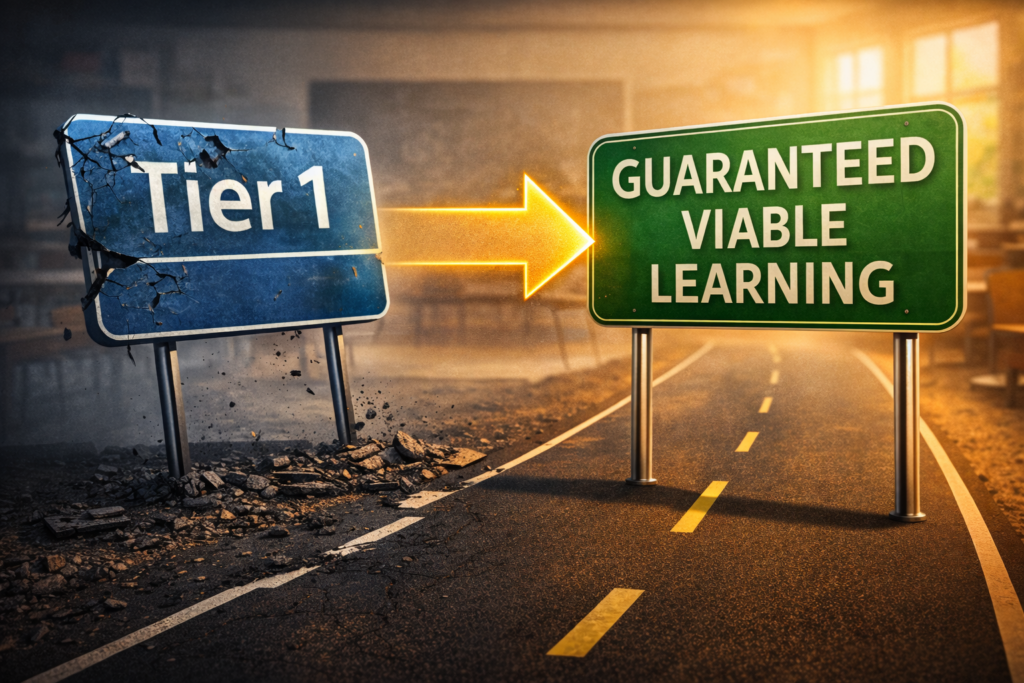
Instead of calling it Tier 1 instruction, I prefer a different term: Guaranteed Viable Learning. Three words. Each one intentional. Each one shaping how we think about what happens in a classroom and what every learner deserves to experience when they walk through the door.
Guaranteed: A Promise We Make to Every Learner
The word guaranteed matters because it shifts the conversation from programs to commitments. A guarantee is not a resource. It is not a textbook. It is not a scripted lesson that arrives in a box. A guarantee is a promise made by the adults in the system about the experience every learner will have in every classroom.
When we say learning is guaranteed, we are saying that certain beliefs and practices will show up consistently no matter where a learner sits in the building. It means classrooms will share common learning intentions. It means success criteria will make learning visible. It means formative evidence will guide decisions during instruction, not just after it. It means feedback will help learners understand what to do next rather than simply labeling performance.
Guarantee does not mean identical lessons. It does not mean every classroom looks the same. It means every learner has access to the same level of intentional, research informed practice. The strategies may look different in the hands of different educators, but the beliefs underneath them remain the same. In other words, the guarantee is not in the script. The guarantee is in the collective commitment.
Viable: Learning That Adapts to the Learner
The second word matters just as much. Viable. Too often, schools design learning experiences that work well for some learners and expect the rest to simply catch up or try harder. When that happens, the burden of success quietly shifts from the system to the learner. If a learner struggles, the conclusion becomes that the learner was not ready rather than asking whether the learning experience was designed to reach them. Viable learning flips that assumption.
Viable means the learning is designed to work for any learner who walks into the room. It means the expectation for what learners will know and be able to do remains constant, but the path toward that learning can adapt. The learning does not shrink because a learner struggles. The learning becomes more accessible. This is the difference between equality and equity. Equality gives everyone the same thing. Equity ensures everyone can reach the same destination.
Viable learning acknowledges that classrooms are full of variability. Different backgrounds. Different prior knowledge. Different levels of confidence. Instead of treating that variability as a barrier, viable learning treats it as a design challenge. Educators adjust scaffolds, feedback, pacing, and support so that the learning remains within reach without lowering the level of thinking required. The target stays the same, but the pathway adapts.
Learning: Evidence Over Activity
The final word may seem obvious, but it might be the most important. Learning. Classrooms are often organized around teaching. Lesson plans focus on what the teacher will explain. Schedules revolve around coverage. Conversations revolve around what was taught that day. But teaching and learning are not the same thing. Teaching is the act. Learning is the result.
Guaranteed Viable Learning places the focus where it belongs. Not on what was delivered, but on what was learned. That means learning must become visible. Evidence must be present. Learners should know what they are trying to learn, why it matters, and what success looks like. Educators should constantly gather signals of understanding while learning is happening so adjustments can occur in real time.
When learning becomes the focus, classrooms begin to change. Questions become more important than answers. Feedback becomes more valuable than grades. Tasks are designed to reveal thinking instead of simply producing completion. Teaching becomes a means while learning becomes the purpose.
Move from a Tier 1 Mindset to a GVL One
Tier 1 instruction was originally intended to represent the learning every learner should experience before additional support is needed. The problem is that over time the term became too broad and too inconsistent to guide real practice.
Guaranteed Viable Learning restores the clarity that schools need. Guaranteed reminds us that learning is a promise made by educators, not a product purchased from a company. Viable reminds us that the learning target does not change because of the learner who walks into the room. The design of learning adapts so every learner can reach it. Learning reminds us that the work of the classroom is not teaching content. The work of the classroom is producing evidence of thinking, understanding, and growth.
When those three ideas live together, something powerful happens. Classrooms become places where expectations are shared, learning is accessible, and progress is visible. Not because a program demanded it, but because the educators guaranteed it.